
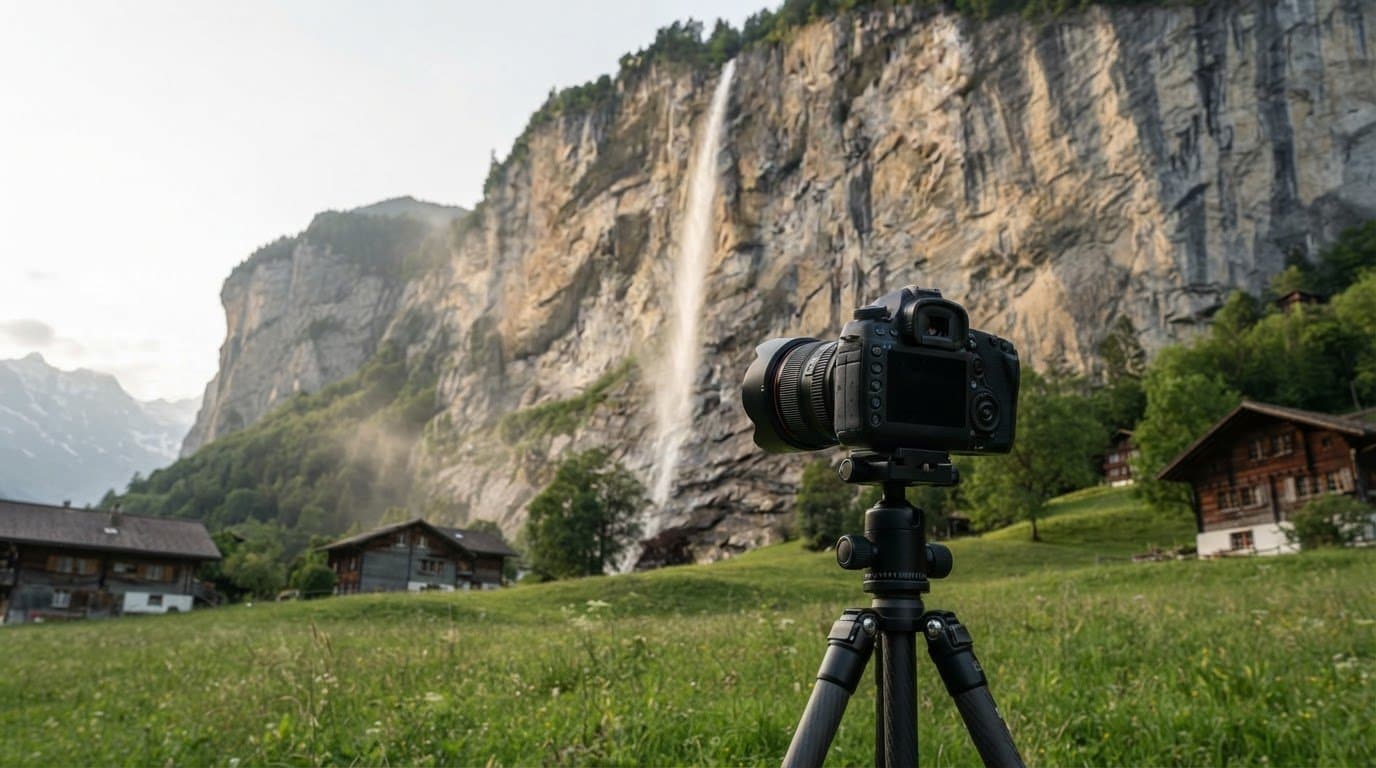
Secret photo spots in Switzerland go beyond alpine viewpoints: look for Lauterbrunnen’s waterfall-framed valley, dramatic mountain landscapes and distinctive corners of five cities. An interactive map brings these locations together, helping you plan a photography route around the scenes you most want to capture.
Switzerland’s famous peaks and lakes draw photographers, but a rewarding itinerary can also include quieter perspectives and city views. Explore secret photo spots in Switzerland, from the Bernese Oberland to Zermatt, Zürich, Lucerne, Bern and Geneva. This guide ranges from Lauterbrunnen’s soaring waterfalls to high-alpine panoramas and urban landmarks, helping you plan a route around the country’s varied scenery.
Key Takeaways
- Use the interactive map to bring alpine viewpoints, village scenes, and city locations into one photography itinerary.
- Plan a Lauterbrunnen visit around the valley’s waterfalls and the striking perspective of Staubbach Falls.
- Choose mountain viewpoints and landscapes that suit the atmosphere and conditions you want to capture.
- Find photo opportunities across Zermatt, Zürich, Lucerne, Bern, and Geneva, and shape a route that balances city and mountain scenery.
1. An interactive map of Swiss photography locations
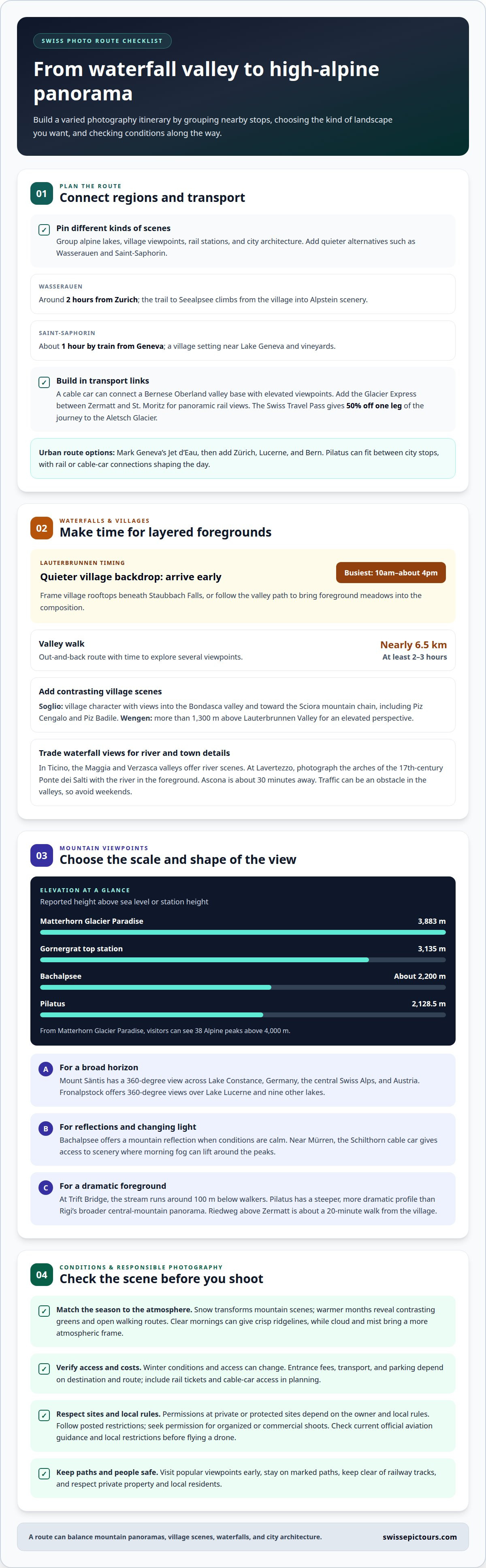
An interactive map turns a country of dramatic contrasts into a practical photography route. Pin alpine lakes, village viewpoints, rail stations, and city architecture, then group nearby stops before you travel. For secret photo spots in Switzerland, look beyond headline viewpoints: Wasserauen and Saint-Saphorin offer very different ways into the landscape. Wasserauen is around 2 hours from Zurich, while Saint-Saphorin is about an hour by train from Geneva.
Use the map to connect lesser-known destinations with transport options. From Wasserauen, the trail to Seealpsee climbs from the village into the Alpstein scenery; in the Bernese Oberland, a cable car can link a valley base with elevated viewpoints. Winter brings a different palette, but conditions and access can change, so plan around the route and season. Add the Glacier Express between Zermatt and St. Moritz for panoramic views on a scenic rail journey. For the Aletsch Glacier, the Swiss Travel Pass gives 50% off one leg of the journey.
City stops add elegant architecture and waterfront scenes to a mountain itinerary. Mark Geneva’s Jet d’Eau, then add Zürich, Lucerne and Bern for a varied urban route. The map can also help you see how a mountain excursion such as Pilatus fits between city stops, including where rail or cable-car connections shape the day.
At private or protected sites, photography permissions depend on the owner and local rules. Follow posted restrictions and seek permission before organized or commercial shoots. Swiss drone rules and no-fly zones vary by location, so consult current official aviation guidance and local restrictions before flying. Entrance fees, transport costs and parking charges depend on your destination and route; include rail tickets and cable-car access in your planning.
For quieter scenes, consider Wasserauen or Saint-Saphorin. Visit popular viewpoints early to avoid their busiest periods. Stay on marked paths, keep clear of railway tracks, and respect private property and local residents. These simple steps help protect the landscape and make the visit more enjoyable.
2. Lauterbrunnen village and Staubbach Falls
Lauterbrunnen pairs a beautiful alpine village with cliffs and falling water. Lauterbrunnen is known for its waterfalls, with Staubbach Falls cascading down the cliffs. Frame the village rooftops beneath the falls, or follow the valley path to bring foreground meadows into the composition. These layered views make Lauterbrunnen one of Europe’s most striking settings for village photography.
Timing changes the feel of the scene. Lauterbrunnen often gets busy with day trippers from 10am until about 4pm, so an early visit offers a quieter village backdrop. For a longer hiking perspective, the out-and-back valley route is nearly 6.5 km and requires at least 2-3 hours. It gives photographers time to explore several viewpoints rather than relying on one frame of Staubbach Falls.
In Ticino, the Maggia and Verzasca valleys offer river scenes that contrast with Lauterbrunnen’s waterfalls. At Lavertezzo, Ponte dei Salti is a double-arched stone bridge dating to the 17th century. Photograph its arches with the river in the foreground, then explore the village streets for a closer sense of place. Ascona is about 30 minutes from Lavertezzo, making it a useful nearby contrast.
For a secluded village atmosphere, Soglio looks into the Bondasca valley toward the Sciora mountain chain, including Piz Cengalo and Piz Badile. Its layered view combines village character with a dramatic mountain backdrop. Saint-Saphorin offers a change of pace, with a village setting near Lake Geneva and vineyards. In the Bernese Oberland, Bachalpsee adds mountain scenery to an itinerary otherwise focused on villages, while Lucerne brings a historic town setting. Together, these places show the range of Swiss village and town photography.
Wengen sits more than 1,300 m above Lauterbrunnen Valley, offering another elevated perspective on the landscape. It can broaden a photography visit beyond the valley floor, with a change in vantage point while keeping the surrounding alpine setting central.
The Maggia and Verzasca valleys attract Swiss amateur and professional photographers. Traffic can be an obstacle on photography trips into Ticino’s valleys, so the page advises avoiding weekends. These alternatives add variety to a route built around waterfalls, village scenes and mountain views.
3. Mountain scenery and seasonal landscapes
For dramatic Swiss Alps photographs, start with Riedweg above Zermatt, Gornergrat, and Mount Säntis. Riedweg is about a 20-minute walk from the village, while Gornergrat’s top station sits at 3,135 metres. From Matterhorn Glacier Paradise, at 3,883 metres, visitors can see 38 Alpine peaks above 4,000 metres. These elevated places reveal striking changes in scale, light, and landscape.
For a distinctive ridge panorama, Mount Säntis offers a 360-degree view across Lake Constance, Germany, the central Swiss Alps, and Austria. The Alpstein massif surrounds the summit, giving photographs a dramatic foreground as well as a broad horizon. Near Mürren, take the Schilthorn cable car in the morning, when fog lifts around the peaks. That shifting scenery can add depth without obscuring the mountain forms.
Season shapes the character of each view: snow transforms the mountains, while warmer months reveal contrasting greens and open walking routes. Choose a clear morning for crisp ridgelines, or watch changing cloud and mist for a more atmospheric frame. Around the Jungfrau region, compare elevated viewpoints with lakeside scenes; Bachalpsee, about 2,200 metres above sea level, offers a striking mountain reflection when conditions are calm.
Pilatus rises 2,128.5 metres above sea level, with a steeper, more dramatic profile than Rigi’s broader central-mountain panorama. For another expansive outlook, Fronalpstock offers 360-degree views over Lake Lucerne and nine other lakes. At Trift Bridge, the stream runs around 100 metres below walkers, making the structure itself a powerful compositional line. These contrasting viewpoints help photographers choose between a sweeping landscape, a strong ridge silhouette, or a dramatic alpine foreground.
The Alpstein massif is in the Appenzell Alps, and Mount Säntis is its highest peak. This relationship can help frame the summit as part of a wider landscape rather than an isolated lookout. Fronalpstock offers views over Lake Lucerne and 9 other lakes, and is located at about ~1900 metres above sea level.
At Brienz Rothorn, the summit is 2350 metres high, another elevated setting to consider when comparing mountain scenes. Staying overnight at Muottas Muragl provides views over the Engadin valley from the room, giving photographers a chance to take in the scenery from their accommodation.
4. Photo spots in Zermatt, Zürich, Lucerne, Bern, and Geneva
Zermatt offers the Matterhorn in changing frames, from village lanes to alpine reflections. Riffelsee is a five-minute walk from Rotenboden train stop, and the lake can mirror the peak in calm conditions. For a longer descent, the route from Gornergrat to Riffelsee along the tracks takes 30 to 40 minutes. A train ticket connects the viewpoint with Zermatt, while nearby glacier scenery adds a striking contrast to the village.
In Zürich, pair the city’s historic streets with the B2 Boutique Hotel library, which houses more than 30,000 old books. Its shelves offer an atmospheric interior subject, while the surrounding city provides architectural details and street scenes. Lucerne brings a different composition: frame the Chapel Bridge with the Reuss River, then explore nearby streets for painted facades and lake views. A visit to Mount Pilatus can extend the day from urban scenes into elevated nature.
Bern’s Old City gives photographers arcades, fountains, and sandstone facades within a walkable historic setting. Look for changing perspectives along its covered walkways, then compose the streetscape with a restaurant terrace or fountain in the foreground. In Geneva, the Jet d’Eau rises 140 metres above the lake and dates to 1886. From downtown, the lakeside walk to the fountain takes about 15 minutes; Baby Plage is about 20 minutes farther along the promenade.
These cities reward a varied itinerary: Zermatt for mountain drama, Zürich and Bern for architecture, Lucerne for bridge-and-water compositions, and Geneva for lakefront scale. Add Grindelwald or a glacier viewpoint if you want to balance urban frames with high-alpine scenery. For a tailored route linking these distinct settings, plan a private Swiss photography journey.
Swiss Epic Tours
Swiss Epic Tours can help shape a thoughtfully paced journey around your photography interests. A Multi-day Grand Tour of Switzerland can connect contrasting regions, while private day tours suit a focused outing around a particular landscape or town. Swiss Alps private tours offer another way to explore mountain scenery with a tailored itinerary and driver-guided travel.
Bring your preferred viewpoints, city stops and seasonal interests into the planning conversation. Your route can reflect what you most want to photograph, from mountain panoramas to historic streets or a blend of both. Contact Swiss Epic Tours to plan a Swiss photography itinerary.
Shape Your Swiss Photography Journey
The secret photo spots in Switzerland are most rewarding when your route leaves space for unhurried observation. A change in light, a quiet street, or an unexpected viewpoint can turn a planned stop into a personal discovery. Choose the atmosphere you want to bring home, then let that preference guide the pace and shape of your days.
Swiss Epic Tours can help connect your photography interests with a journey through the country. The Multi-day Grand Tour of Switzerland, Zurich City Tour and Swiss Alps private tours offer different ways to balance urban character and mountain scenery. Whether you have a clear route in mind or are still gathering ideas, start with the places and experiences that matter most to you.
Contact Swiss Epic Tours to plan your trip, and take the first step toward a memorable Swiss journey.
Frequently Asked Questions
Where are hidden photography spots near Zurich, Lucerne, and Geneva?
Near Zurich, Rosenlaui and Gelmersee offer quieter mountain-and-water scenes beyond the city. For central Switzerland, consider Bannalpsee, a reservoir with a striking alpine setting, or the mountain village of Stoos. Around Lake Geneva, Saint-Saphorin’s vineyards and Chillon Castle provide village, landscape, and historic details. At Chillon, the chapel’s 14th-century murals offer a distinctive subject beyond the lakeside views.
How do you reach lesser-known Swiss viewpoints by public transport?
Combine rail travel with local mountain connections and a walk where needed. For example, trains from Lauterbrunnen to Wengen leave every 30 minutes during the day, and the ride takes 15 minutes. To reach Berggasthaus Äscher, take the Ebenalp cable car, then walk 15-20 minutes from its upper station. Build in time for the final trail, not just the train journey.