Seven days is a useful starting point for an introductory trip to Switzerland. The connoisseur’s guide to traveling Switzerland begins with a balanced week: pair alpine scenery with time in Bern, Zürich, and Luzern instead of rushing from one viewpoint to the next. A thoughtful pace makes all the difference.
It’s easy to see why you might want to fit in as much as possible: Switzerland’s cities, lakes, and mountain landscapes each have their own distinctive pull. This guide will help you decide how long to stay, where to base yourself, and how to travel between destinations with less friction. You’ll also find a considered introduction to Bern’s historic streets, Zürich’s urban energy, and Luzern’s lakeside setting, with practical ideas for shaping a trip that feels balanced, personal, and richly Swiss.
Key Takeaways
- Plan a measured route that gives mountain landscapes and city stays room to shine, rather than packing in too many stops.
- Choose accommodation around the experiences you value most, balancing convenient city bases with time in the Alpine regions.
- Use Switzerland’s rail connections and scenic journeys to link destinations, and consider private travel when a tailored route suits your plans.
- Discover each city on its own terms: Bern for its medieval character, Zürich for its lively urban feel, and Luzern for its lake-and-mountain setting.
1. Swiss landscapes, Alpine culture, and neighboring influences
Switzerland’s landscape moves from lakeside promenades to dramatic mountain valleys, with the Alps covering about 65% of the country. More than 1,500 lakes and four national languages give each region a distinct character. Germany, Austria, France, and Italy border Switzerland, and their neighboring influences are reflected in local speech, architecture, and food. In the Lauterbrunnen Valley, cliffside villages and the 300-meter Staubbach Falls make the alpine scenery feel especially grand.
Regional specialties reward travelers who linger. Appenzeller cheese has been made by hand in the same way for more than 700 years, while Gruyères is famed for its namesake cheese. Swiss wine is another regional pleasure: around 2% of annual production is exported, so local bottles are an especially rooted choice at the table. In Appenzell, pastoral scenery, small towns, folk museums, and traditional customs offer a vivid counterpoint to Switzerland’s polished cities.
History and government shape the country’s distinctive cultural identity. The Swiss Confederation formed between the 1200s and the 1500s, and the Treaty of Westphalia established Switzerland’s neutrality in 1648. Today, the country has 26 cantons and a seven-member Federal Council. These details help explain why regional traditions remain prominent, from local festivals to the languages heard along a single journey.
Plan around seasonal character and local celebrations. Switzerland’s National Day falls on August 1st, while Basel Fasnacht brings carnival energy between February and March. The annual celebration lasts three days and draws more than 200,000 visitors. For an introductory itinerary, seven days is a useful starting point for combining city time, alpine scenery, and regional discoveries without treating every stop as a quick photo opportunity.
Visitors can approach Swiss customs with courtesy and curiosity. In restaurants, tipping is customary but not obligatory; diners may round up the bill or tip approximately 10 percent. For dining etiquette, follow the company of your hosts, take time over regional dishes, and ask about local cheese or wine traditions. A thoughtful pace makes each meal part of the cultural experience.
2. Accommodation options
Choose accommodation based on the landscapes and city experiences you want nearby. A central base can simplify visits to historic districts, museums, and transport connections, while staying in a mountain region brings alpine scenery closer. For a French-speaking itinerary, consider lodging near Lake Geneva; for a city-and-lake combination, Lucerne offers a different setting. Your choice of region will shape the rhythm of each day.
Accommodation costs vary by style and location. Treat the figures as planning estimates, then decide whether location, room style, or extra amenities matter most for your trip.
For a more restorative stay, look for accommodation with wellness facilities and leave unhurried time to enjoy them. A hotel with a spa may suit travelers unwinding after a winter day outdoors or a long journey between regions. If wellness is central to your plans, prioritize it when choosing a base; if sightseeing comes first, favor easy access to the places you want to explore. Either way, match your stay to your preferred pace.
Think about how often you want to change hotels. Staying in one central location means less packing and unpacking, while moving between regions brings you closer to distinct landscapes and local experiences. If the Jungfraujoch is on your itinerary, plan the mountain excursion alongside your overnight stays rather than as an afterthought. List the experiences you want nearby, then choose a base that supports them without filling every day.
Swiss hospitality can make a stay feel connected to its surroundings. In a historic town, look for lodging near old streets and cultural landmarks; in an alpine village, prioritize the mountain atmosphere. A little chocolate from a local shop makes a welcome treat after arrival. Let the region guide your choice, so your room becomes part of the journey, not just a place to sleep.
3. How to get around in Switzerland?
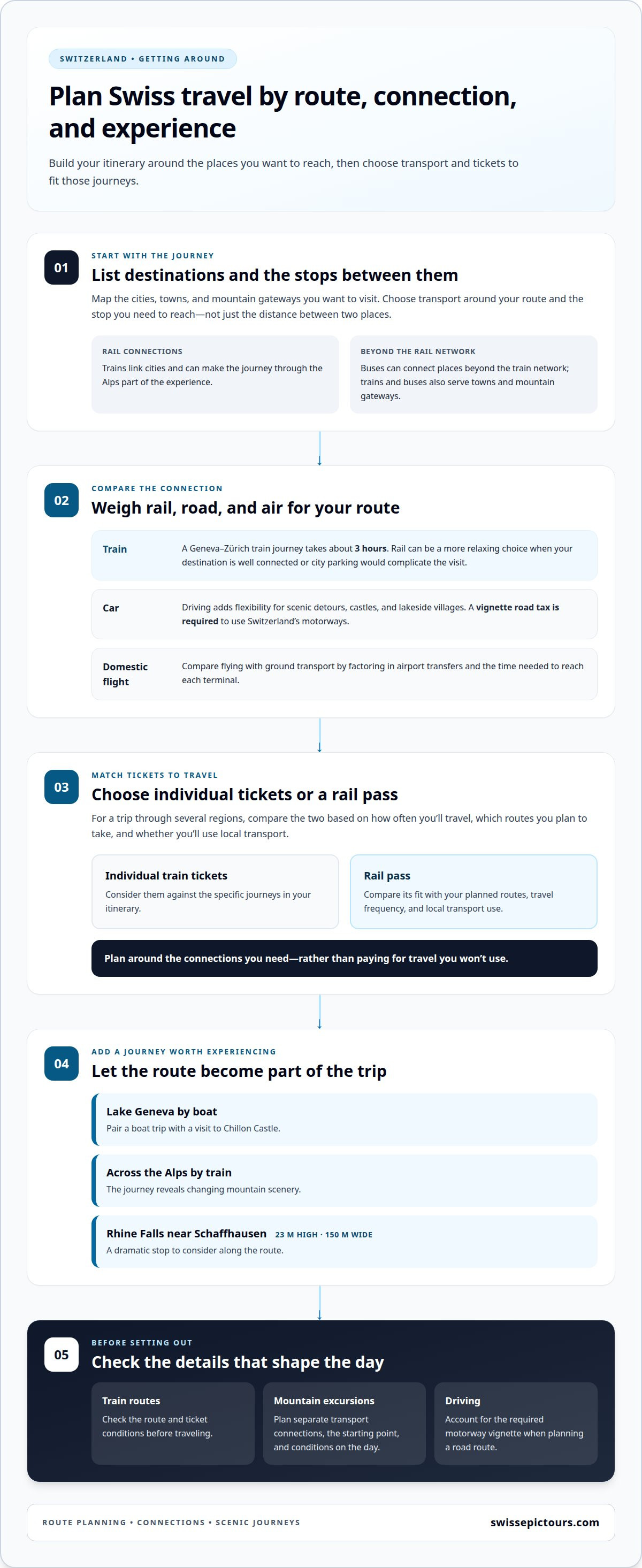
Switzerland’s rail network makes city-to-city travel a scenic part of the journey. A train from Geneva to Zürich takes about 3 hours, linking Lake Geneva’s lakeside atmosphere with Switzerland’s largest city. Between destinations, trains and buses are useful for reaching towns and mountain gateways; choose based on your route and the stop you want to reach. For longer distances, compare ground transport with domestic flights by considering airport transfers and time spent reaching each terminal.
For a trip through several regions, compare individual train tickets with a rail pass. The better option depends on how often you’ll travel, which routes you plan to take, and whether you’ll use local transport. Build your itinerary around the connections you need, then choose tickets that match those journeys rather than paying for travel you won’t use.
Driving gives you flexibility for scenic detours, including castles and lakeside villages. A vignette road tax is required to use Switzerland’s motorways, so account for it when planning your route. Trains can be more relaxing when your destination is well connected or parking would complicate a city visit. A car suits routes with several stops, while buses can connect places beyond the rail network.
Some journeys are destinations in themselves. A boat trip across Lake Geneva pairs beautifully with a visit to Chillon Castle, while a train journey through the Alps reveals changing mountain scenery. Near Schaffhausen, Rhine Falls offers a dramatic stop; the falls are 23 meters high and 150 meters wide. Hiking routes and mountain excursions may require separate planning around the starting point, transport connections, and conditions on the day.
For restaurants, reserve ahead if a particular dining time or sought-after table matters to your plans. Before traveling by train, check the route and ticket conditions; mountain excursions may involve separate transport connections, so leave time to coordinate them. A little planning helps keep rail, dining, and alpine plans working together.
4. Cities including Bern, Zürich, and Luzern
Bern is Switzerland’s capital, and its old town is best explored on foot. Medieval shopping arcades stretch nearly four miles, creating a graceful route past historic façades, cafés, and river views. Take time to wander rather than treating the arcades as a quick passage. Their covered walkways make Bern a compelling destination for architecture and unhurried browsing. Pair a stroll with a museum visit, then pause to take in the distinctive old-town setting.
Zürich, Switzerland’s largest city, offers a contrasting urban rhythm. Start in the historic center, then head west to explore the district that developed from an industrial area over the last 10 years. This shift gives the city a different texture, with former industrial surroundings beside contemporary urban life. Zürich suits travelers who want city culture, shopping, and easy transport connections in one stay. Its evening lights offer another perspective after a day exploring the streets.
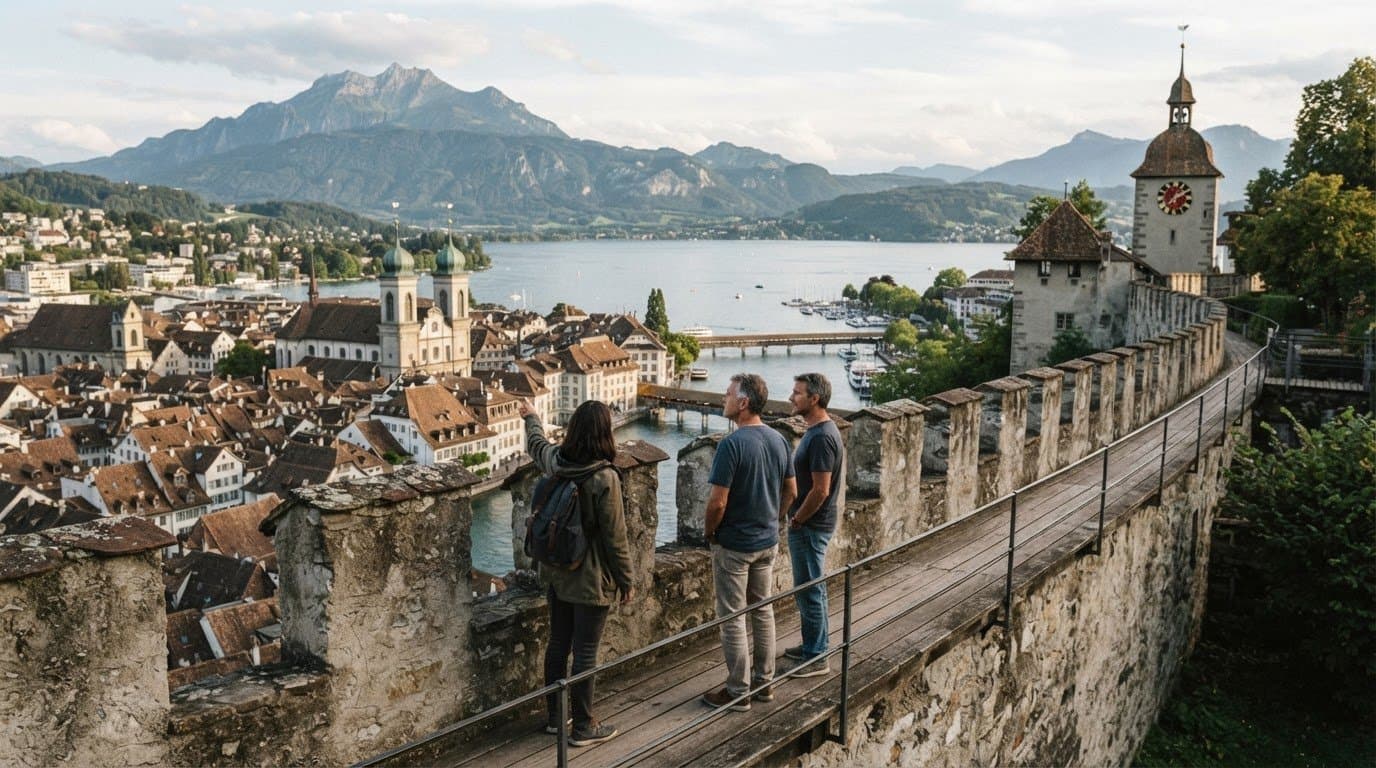
Luzern brings a lakeside setting and historic landmarks together. The city’s famous wooden bridge dates to the 14th century, making it a natural stop during a walk through the old center. Lake Luzern is served by vintage steamships and framed by mountains, so a boat journey offers a scenic change from city streets. The historic needle dam at the Reuss outflow was built in 1860 to regulate the lake’s water level. Together, bridge, lake, and mountain views give Luzern a distinct character.
For an introductory visit, give each city time to reveal its own appeal: Bern for medieval streets, Zürich for urban energy, and Luzern for lake-and-mountain scenery. If Alpine sports or skiing are priorities, consider extending the route to Zermatt, a resort at the foot of the Matterhorn. The peak rises to 4,478 meters, while the Matterhorn Glacier Paradise cable car station sits at 3,883 meters. That contrast helps you choose between city days and high-mountain experiences.
To explore Zürich with a locally guided city experience, book a Zurich City Tour as part of your Swiss itinerary.
Swiss Epic Tours
Swiss Epic Tours can turn your ideas for Switzerland into a coordinated private journey. If you’re balancing Bern, Zürich, and Luzern with mountain scenery, its tailor-made tours connect city time with alpine experiences. Choose the Multi-Day Grand Tour of Switzerland for a broader route, or build an itinerary around Swiss Alps private tours and private day tours in the places that matter most to you. A Zurich City Tour adds a guided introduction to the country’s largest city.
This is a natural next step if you’d rather spend less time organizing separate excursions and more time enjoying the landscapes, historic streets, and regional character along the way. Share the destinations and experiences you have in mind, then contact Swiss Epic Tours to plan your Switzerland itinerary.
Shape a Swiss journey that feels like yours
The most memorable itinerary isn’t necessarily the one with the most stops. Let the connoisseur’s guide to traveling Switzerland inspire a route shaped by what draws you most: time in a city, a quiet lakeside pause, or the anticipation of an alpine view. Choose the experience you want to remember, then let it set the pace and character of your journey.
Swiss Epic Tours can turn that direction into a thoughtfully arranged trip, with private experiences tailored to your interests and travel style. Whether you have a clear route or just a few places in mind, a conversation can help bring the pieces together. Your Swiss story can start with one considered decision.
Contact Swiss Epic Tours to plan your Swiss journey, and take the next step toward an unforgettable stay.
Frequently Asked Questions
How long to go?
For an introductory visit, plan around seven days. The connoisseur’s guide to traveling Switzerland offers a practical framework: choose a few experiences, then leave time to enjoy them without turning every day into a transfer. If you’re drawn to quieter regional discoveries or mountain excursions, allow more time. If Bern, Zürich, and Luzern are your priorities, shape the route around those city stays.
How to get around in Switzerland?
Use trains and buses to connect destinations, and consider a car if your plans depend on flexible stops along the way. The best fit depends on your route, luggage, and how much time you want to spend traveling rather than exploring. Group nearby places together to reduce backtracking. For a trip across several regions, map the connections before deciding where to stay each night.
When to go?
Choose your travel season according to the experiences you want. Most mountain areas are open from July, while many resorts close between the skiing and summer seasons, usually from April to June. Winter suits snow-focused plans; warmer months offer more opportunities for outdoor exploration. Since seasonal access varies by destination, build your itinerary around the activities available in your chosen region.
Where to go?
Start with the experience you want most, then build a route around nearby places. Lugano offers boat trips on its lake and mountain lifts to lakeside peaks, adding an Italian-speaking city to a Swiss itinerary. For scenic journeys and hiking, consider the Upper Engadine, a Romansh-speaking alpine valley. These destinations bring distinct regional character to a trip beyond the best-known cities.
Why visit Switzerland?
Switzerland rewards travelers who enjoy contrast: a day can take you from urban streets to a quiet lakeshore or dramatic mountain scenery. Regional languages, local food traditions, and changing landscapes give each journey its own character. Instead of focusing only on famous landmarks, leave room for a leisurely meal, a scenic journey, or a walk through a historic center. Those unhurried moments can make a trip feel personal.
What are Switzerland’s best destinations for luxury and connoisseur travel?
For a refined itinerary, match destinations to your interests rather than trying to see everything. The connoisseur’s guide to traveling Switzerland might begin with Lugano’s lakeside boat trips and mountain lifts, or the Upper Engadine’s alpine scenery, hiking, and scenic journeys. Add a city stay if culture and dining matter most. A private, tailor-made route from Swiss Epic Tours can connect these experiences at a pace that suits your priorities.